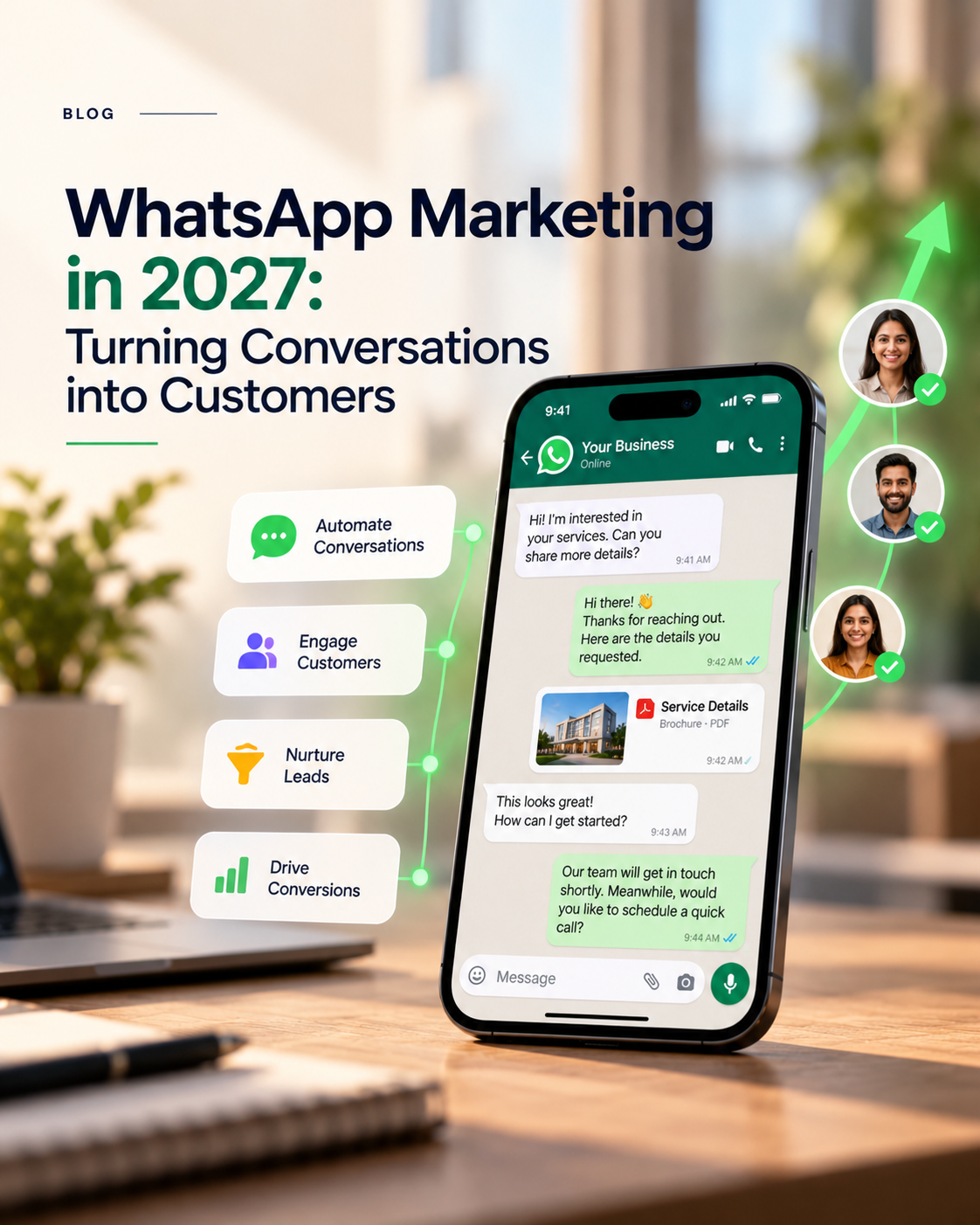
WhatsApp Marketing in 2027: Turning Conversations into Customers
A customer discovers your business, clicks an advertisement, and sends a WhatsApp message. Your business has gained an opportunity—but what happens next?
If the response is delayed, the conversation feels impersonal, or the customer receives no follow-up, that opportunity can quickly disappear.
In 2027, WhatsApp marketing is about more than sending promotional messages. It is about creating meaningful customer conversations, responding at the right time, and guiding potential buyers towards a decision.
For businesses looking to improve customer communication and conversions, the real value of WhatsApp lies not in how many messages they send, but in how effectively they turn conversations into customers.
Why WhatsApp Marketing Matters for Businesses
Customers increasingly expect communication to be convenient, personal, and timely. WhatsApp gives businesses a familiar channel to answer questions, share information, provide updates, and maintain contact with interested prospects.
For example, imagine someone enquires about a home loan. Instead of receiving a generic promotional message, they could receive a helpful response, information about the documents required, and an option to speak with an advisor.
The conversation becomes useful rather than intrusive.
When used strategically, WhatsApp can support the entire customer journey—from the first enquiry to purchase and after-sales communication.
Three Ways to Turn WhatsApp Conversations into Customers
1. Automate Responses Without Losing the Human Touch
Customers don't always enquire during business hours. Automated greetings and quick replies can acknowledge messages immediately and answer common questions.
Businesses can use automation to:
- Welcome new enquiries.
- Share service details, brochures, or booking links.
- Answer frequently asked questions.
- Collect basic information about customer requirements.
- Direct complex enquiries to the appropriate team member.
However, automation should make communication easier, not create frustrating conversations. Customers should have a clear way to reach a real person when they need additional help.
2. Nurture Leads Instead of Sending Repeated Promotions
Not every customer is ready to buy immediately. Some need more information, others are comparing options, and some may require time before making a decision.
This is where lead nurturing becomes important.
For example, a training institute could respond to an enquiry by sharing course details, the syllabus, upcoming batch dates, and relevant FAQs. If the prospect remains interested, the institute could follow up with an invitation to attend a counselling session.
Each message should offer something relevant to the customer's needs.
The goal is to build confidence and help customers make informed decisions—not overwhelm them with promotional messages.
3. Follow Up at the Right Time
A missed follow-up can mean a missed opportunity.
Businesses can create a structured process to ensure that genuine enquiries receive timely attention. Automated reminders can alert sales teams when a prospect needs a response, while approved messaging workflows can support relevant follow-ups.
For instance, if a customer requests a quotation but hasn't responded, the business could send a polite follow-up asking whether they need clarification.
The timing and frequency should suit the customer's journey, and businesses should respect consent, preferences, and opt-out requests.
How AI and Automation Can Improve WhatsApp Marketing
AI-powered tools and automation can help businesses manage conversations more efficiently, particularly when enquiry volumes increase.
Depending on the tools and integrations used, businesses may be able to:
- Categorise enquiries by service or requirement.
- Identify messages that need urgent attention.
- Suggest responses to common questions.
- Route qualified prospects to the sales team.
- Schedule reminders and track follow-ups.
- Analyse conversation patterns to identify common customer concerns.
These tools can reduce repetitive work and help teams respond more consistently. However, automated systems need clear rules, appropriate data protection, and human oversight for sensitive or complex enquiries.
What Businesses Should Avoid
A successful WhatsApp strategy requires more than automation. Businesses should avoid:
- Sending unsolicited bulk messages.
- Using generic messages for every customer.
- Following up repeatedly without considering customer preferences.
- Automating conversations without a human support option.
- Measuring success only by the number of messages sent.
Instead, focus on relevant communication, genuine customer interest, response quality, and measurable business outcomes.
Measure Conversations by the Results They Generate
A high number of WhatsApp conversations doesn't automatically mean better business performance.
Track meaningful metrics such as:
- Response time.
- Qualified enquiries.
- Conversations that lead to consultations or appointments.
- Lead-to-customer conversion rate.
- Sales generated through WhatsApp.
- Customer satisfaction and repeat purchases.
These insights help businesses understand which conversations are creating value and where improvements are needed.
Turn Every Meaningful Conversation into an Opportunity
WhatsApp marketing is evolving from a simple messaging channel into an important part of customer communication and lead management.
Businesses that combine timely responses, relevant follow-ups, thoughtful automation, and personal communication can create a smoother experience for potential customers.
At Brighton Technologies, we believe effective digital solutions should do more than generate enquiries. They should help businesses manage those enquiries, strengthen customer relationships, and create a clearer path from initial interest to conversion.
Because a conversation is only the beginning. The real opportunity is what your business does next.